
Chicago Couples Therapy
Two people can love each other and still keep missing each other. You can know, in calmer moments, what you want to say, what you should not say, what your partner needs to hear, and still find yourself in the same argument, the same silence, the same distance you cannot seem to close. Couples therapy in Chicago works at the level where those patterns actually live, helping the two of you change what happens between you, not just what you understand about it.
-
Speaker 1: 00:00
Hi, I'm Meg and I'm a couples therapist based here in Chicago. You might be ready for couples therapy if it feels off between you and your partner, whether that's constant conflict, disconnection you can't quite name, or even a betrayal that's under crack in the foundation. I always say couples therapy is clarifying because we go underneath the surface arguments to figure out what you actually need the other person to understand. We build real sustainable tools for connection that conflict management toward a relationship that has more trust and depth than before. If any of that sounds like where you are or something you'd like to know more about, I'd love to connect. You can schedule a free intro call using the link below.
Couples Therapy with Meg Doster, LMFT
Meg Doster, LMFT, talks about what couples therapy looks like at Still Oak Counseling and who it helps. Meg is Gottman Method trained and works with couples who feel stuck in the same patterns, disconnected, or are rebuilding after a rupture. If you want to see if Meg is the right fit, schedule a free intro call below.
Who Couples Therapy Helps
This work can help if any of the following sound like you:
You are having the same fight on repeat. You both know how it ends, and neither of you knows how to stop it.
You used to feel close, and now you live more like roommates than partners.
Something has ruptured the trust between you, like an affair or a major betrayal, and you do not know if you can come back from it together.
You are engaged or about to make a serious commitment, and you want a foundation, not just hope.
One or both of you carries anxiety, trauma, or a history of people-pleasing, and those patterns are now showing up in the relationship.
What is the Gottman Method for Couples Therapy?
The Gottman Method is an evidence-based approach to couples therapy developed by Drs. John and Julie Gottman, built on more than four decades of research into what actually makes relationships last. Most couples therapy is built on theory. The Gottman Method is built on data, specifically on what the Gottmans learned by observing thousands of couples over time and identifying the exact patterns that predict whether a relationship will thrive or fall apart.
What they found is that the difference between couples who make it and couples who don't is not how much they fight. It is how they fight, how they repair after conflict, and how much genuine friendship and connection exists underneath the hard moments. For couples in Chicago navigating everything from chronic disconnection to rebuilding after a major rupture, that research foundation matters. It means the work is not based on guesswork.
The Gottman Method works by helping you understand the specific patterns running your relationship and giving you concrete skills to interrupt them. Not in theory. In practice, in real time, in the moments that matter. That means learning to recognize when a conversation is starting to go sideways before it goes all the way there. Learning how to make a repair attempt that actually lands. Learning how to stay connected even when things are hard.
This is structured, research-backed work. It is not advice-giving and it is not about taking sides. It is about helping the two of you build something more durable than what you came in with. For couples navigating anxiety, trauma, or patterns like people-pleasing that show up inside the relationship, the Gottman Method provides a framework that holds all of that without losing sight of the relationship itself.
At Still Oak, Meg is Gottman Method Couples Therapy Level 1 trained and brings this framework to every couples therapy session in Chicago, whether you are in crisis, feeling disconnected, or simply want a stronger foundation before making a serious commitment.

Meet Your Chicago Couples Therapist
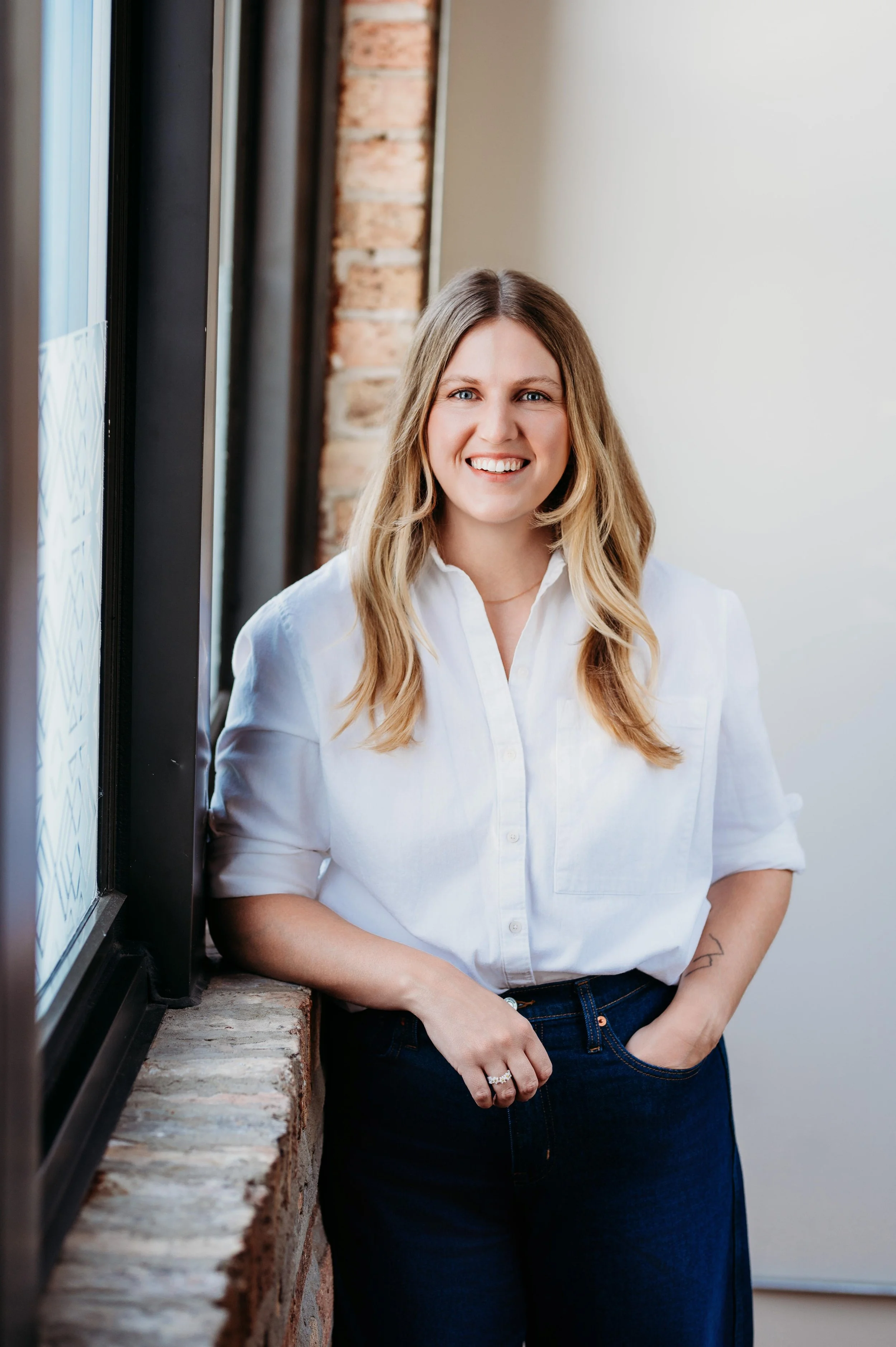
Meg Doster, LMFT
Hi, I'm Meg. I know what it's like to avoid the hard conversations, to swallow your truth to keep the peace, and to tell yourself that's just how things are. I've done my own work around conflict, people-pleasing, and learning that the things we avoid in relationships tend to cost us more over time than the things we face.
That experience is part of what drew me to couples work. There is something I find genuinely moving about watching two people who love each other find their way back to each other. The moment a pattern that has been running for years finally breaks. The moment someone feels truly heard by their partner for the first time in a long time. That depth of healing is what I show up for.
As a Gottman Method trained couples therapist in Chicago, I work with partners who are stuck in the same loops, who have grown distant, or who are trying to rebuild after something broke the trust between them. Many of the couples I work with are also navigating anxiety, trauma, or patterns like people-pleasing that started long before the relationship and are now showing up inside it. My approach is warm and direct. I will not let you stay comfortable in the patterns that brought you here, and I will be with you every step of the way as you build something better.
For individuals looking for support alongside couples work, I also offer EMDR therapy.
Credentials: Licensed Marriage and Family Therapist, Gottman Method Couples Therapy Level 1 Trained, EMDR Trained
Training: Gottman Institute, EMDRIA
Specialties: couples in conflict, communication patterns, rebuilding after rupture or affair, premarital counseling, partners feeling disconnected
Clientele: Couples
Location: Chicago, IL
Virtual therapy: Yes
Private pay. Superbills provided for out-of-network insurance reimbursement.
FAQs About Couples Therapy
-
Most couples wait too long, whether you call it couples therapy or marriage counseling. Research shows the average couple waits close to three years from the first signs of trouble before reaching out, and by then the patterns have hardened. You do not need to be in crisis to start. Couples therapy in Chicago can help if any of these are true: you keep having the same fight, you feel more like roommates than partners, trust has been broken, you are about to make a serious commitment and want a foundation, or a private struggle like anxiety, trauma, or people-pleasing is leaking into your relationship in ways you cannot solve on your own. If two or three of those sound like you, couples therapy is appropriate, not premature.
-
Most couples see meaningful change in 12 to 20 sessions of couples therapy, which works out to roughly four to six months of weekly meetings. Some couples need fewer sessions if they are coming in proactively or to address a specific issue. Others need more, especially when there is a history of trauma, a recent rupture, or long-standing patterns. We typically start with weekly 50-minute sessions to build momentum. Once the work is taking hold and the patterns between you are shifting, we move to every other week, and eventually to monthly check-ins as needed. The goal of couples therapy is not to keep you in therapy. It is to give you the skills and the language to handle conflict and connection on your own.
-
In your first couples therapy session, both of you come in together. The first 50 minutes are about getting your story on the table: how you met, what is working, what has stopped working, and what brought you in now. You will not be put on the spot or asked to perform. The goal is for Meg to understand the shape of your relationship from both sides. After the joint session, Meg meets with each of you individually for one session to hear what is harder to say in front of your partner. Then she brings you back together to share a clear picture of what she is seeing and a plan for the work ahead. This three-session intake is part of the Gottman Method, and it is designed so both of you feel heard before any change work begins.
-
The Gottman Method is a couples therapy approach developed by Drs. John and Julie Gottman, built on more than 40 years of research into what makes relationships succeed or fail. By observing thousands of couples in a research setting, the Gottmans identified the specific patterns that predict divorce (criticism, contempt, defensiveness, and stonewalling) and the specific habits that build long-term connection (friendship, shared meaning, and skilled repair after conflict). The Method works because it does two things at once. It helps you understand the patterns running your relationship, and it gives you concrete, practiced skills to interrupt those patterns in real time. This is not advice-giving therapy. It is structured, evidence-based work with strong research support. Meg is Gottman Method Couples Therapy Level 1 Trained.
-
This is one of the most common situations couples therapists hear, and you have more options than you think. First, ambivalence about couples therapy is not the same as being against the relationship. Most reluctant partners are not opposed to working on things. They are opposed to feeling ganged up on, blamed, or analyzed. A skilled Gottman-trained therapist works to make the room feel safe for the more skeptical partner from the first minute, which often shifts their willingness within one or two sessions. Second, if your partner is firmly not ready, you can still begin individual therapy focused on the relationship. When one partner makes consistent changes, the dynamic between the two often shifts in ways that draw the other partner in. You do not need both feet in the door to start. You need one.
-
Yes, and this is one of the areas where the Gottman Method has the most specific research and structure. Rebuilding after an affair or major breach of trust is not about pretending it did not happen or rushing to forgive. The Gottman Method calls the process Atone, Attune, and Attach. Atone is the work the partner who broke trust does to acknowledge what happened, answer hard questions, and stop the behavior. Attune is the slower work of understanding what was happening underneath the rupture. Attach is rebuilding the closeness and intimacy that often disappear after betrayal. This work takes time, often 9 to 18 months of consistent couples therapy. But research shows that couples who do this work in a structured way often come out of it with a stronger relationship than they had before.
-
No, and most couples who do this work are not in crisis at all. Premarital counseling is built for couples who want to prepare for marriage, not couples who are trying to fix one. About half of all divorces happen within the first seven years, and most couples spend more time planning the wedding than planning the life that comes after it. Meg's approach is grounded in the Gottman Method, the same research-based framework used in our couples therapy work. You will use tools like the Love Maps exercise to learn how your partner actually thinks, and you will talk through topics couples often skip before the wedding, like money, family, and conflict style. The goal is not to find problems. It is to build the habits that keep small disagreements from turning into bigger ones later. If you are engaged and feeling good about your relationship, that is exactly the right time to start.
-
Couples therapy at Still Oak Counseling is private pay. Meg's fee for a 50-minute couples therapy session is $250. We do not bill insurance directly because most insurance plans do not cover couples therapy. Insurance requires a mental health diagnosis tied to an individual person, and relational distress is not a covered diagnosis. We do provide a superbill at the end of each month if you want to submit it to your insurance for out-of-network reimbursement. We have also partnered with a third party who will submit the superbill on your behalf. Your reimbursement rate depends on your plan, so we recommend calling your insurance and asking what your out-of-network benefits look like for family or couples therapy. Many of our couples receive partial reimbursement this way. If cost is a concern, we are happy to talk through it on a consultation call.
-
You should feel a shift by around session 8. Not everything fixed. But something different. A moment where you understood your partner in a way you had not before. A conflict that went somewhere new instead of the same old place. A repair attempt that landed instead of getting brushed off. By the middle of couples therapy, the fights are shorter and less intense when they happen. You catch yourselves earlier in the loop. You start using tools from sessions in your everyday life. By the end of couples therapy, you should feel like you and your partner can handle hard conversations without things going off the rails, and the relationship is a source of comfort rather than stress. If you are 8 or 10 sessions in and nothing is shifting, that is a conversation to have with your therapist, not a sign to give up.
-
Couples therapy can still help, and this is one of the most honest places a relationship can start from. When one or both of you is unsure about staying, the focus of couples therapy shifts. Instead of trying to fix the relationship, the goal becomes helping you both get clear on what you actually want before either of you makes a decision you cannot take back. Sometimes that clarity leads to repair. Sometimes it leads to a thoughtful separation where both people can leave with their dignity intact and their relationships to their children, families, and themselves preserved. Either is better than staying stuck in ambivalence for another year. If you are not sure whether you want to stay, that is worth saying out loud in the first session. Meg will not push you toward any particular outcome. The work is about helping you see clearly, not about saving the relationship at all costs.
Start Working With a Chicago Couples Therapist Today
Resources
Want to learn more about couples therapy and the Gottman Method? These are trusted sources I draw on in my own continuing education and practice.
American Association for Marriage and Family Therapy (AAMFT)
Greater Good Science Center, peer-reviewed research on relationships and the science of connection